


 HOME
HOME By
By 
Building a successful game today involves far more than finding a strong core mechanic.
At Vietnam Game Connect 2026, sessions from the Build Track panel brought together developers, product leaders and industry experts to explore what happens behind a sustainable game business - from Data and Retention to Team Management, Finance and Intellectual Property.
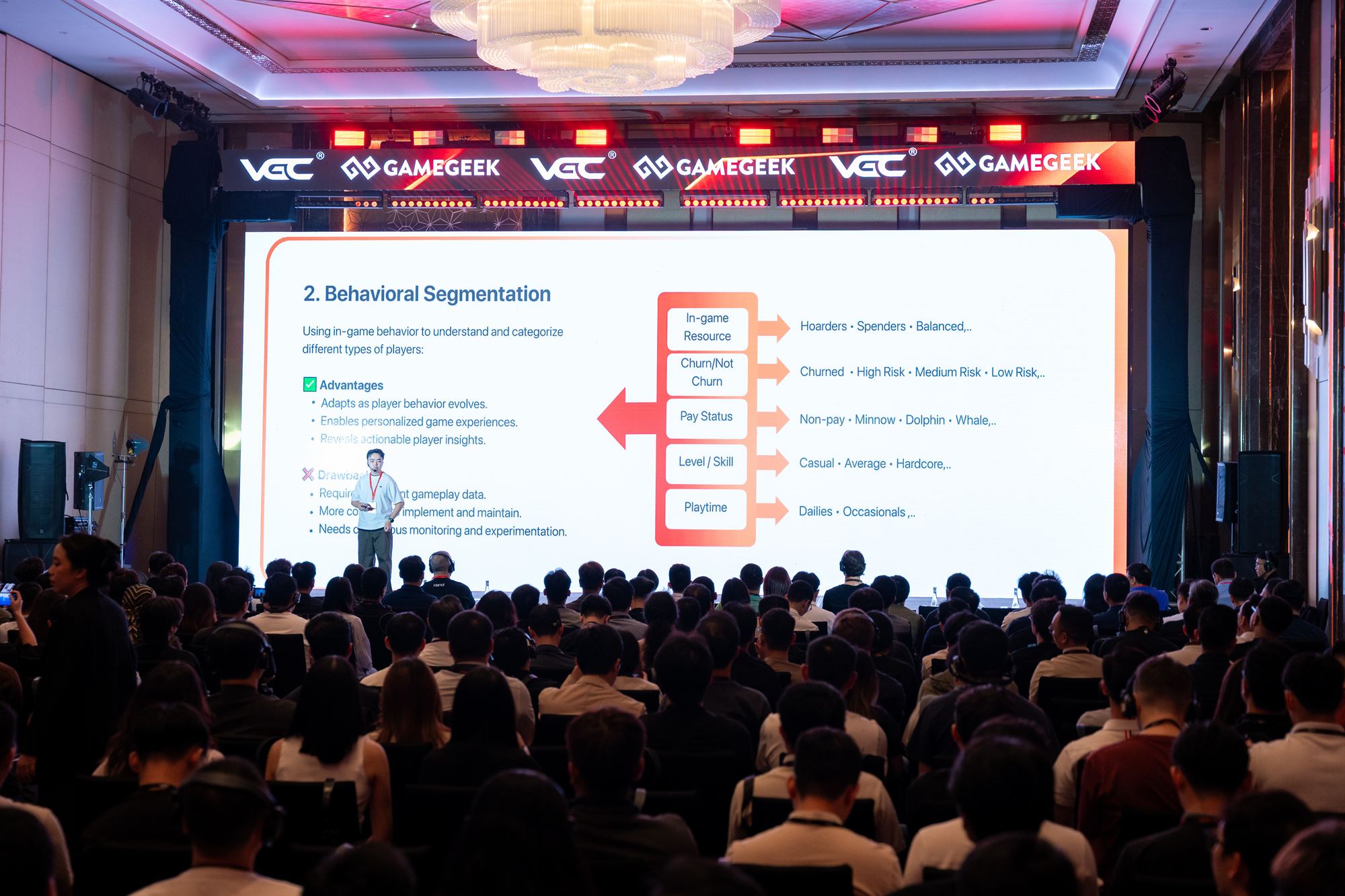
The day began with a strong focus on player understanding. Nhat Nguyen from Bravestars Games explored how player segmentation can help puzzle teams make more informed design decisions, while Trung Nguyen of Databuckets looked at how real-time analytics and personalization can turn player behavior into actionable product insights. Together, the sessions reflected an increasingly data-driven approach to development: instead of designing around an “average player”, studios can understand how different groups behave and build experiences around those differences.
Retention was another major theme. Mustafa Can Gökçel from Moment Games discussed what comes after the initial hook, focusing on progression, meta systems and content strategies that can encourage players to stay beyond the first few days.
The panel “Building for Depth: Studios on the Mid-Core Edge”, meanwhile, brought together representatives from Doors Studio, Panthera, Gamee Studio and Habby to discuss how studios can build deeper systems and stronger long-term engagement.
But VGC’s definition of “Build” extended beyond the product itself. Sessions throughout the afternoon looked at the infrastructure required to support a growing studio. Cường Dino of Dino Games discussed leadership and team alignment, while Payoneer explored international payment and cash-flow structures for studios operating globally. Legal and IP protection were also brought into focus through sessions covering copyright, ownership and the challenges Vietnamese studios can face when taking their products overseas.
Technology rounded out the conversation, with discussions around AI-powered development workflows and how level design itself can influence both Retention and Monetization.
Across the Build Track, one message repeatedly emerged: a strong game is the result of a strong system behind it. Data informs Design. Design drives Retention. Teams turn ideas into execution. Finance, Legal and Technology allow that execution to scale.
For Vietnamese studios with increasingly global ambitions, building the next successful game may therefore require more than creating a better product. It requires building a better company around it.